

Concrete is one of those things most people only order a handful of times, but it has a big impact on how long a project lasts. Whether you are a homeowner planning a shed base or a builder lining up footings or installing curbs, getting a few key questions straight before you book can make the whole job run far more smoothly.
Below is a practical guide to the things people usually ask New Mix Concrete before they place an order, with simple answers that work for real UK sites and weather.
- How much concrete do I actually need?
Guesswork on volumes is one of the main reasons jobs get stressful. Order too little and you are scrambling to patch a slab that should have been poured in one go. Order too much and you are paying for material you did not really need.
For most domestic and general construction projects, the starting point is straightforward:
- Measure the length, width and depth of the area.
- Convert everything into metres.
- Multiply those three numbers to get the volume in cubic metres.
From there, a quick chat with the concrete supplier can help check whether your depth is realistic for the type of project, such as a patio, driveway, base, footings or extension, and whether you need to allow for thickening at edges or around load points. With New Mix’s volumetric trucks, the concrete is batched on site, so you only pay for what you actually pour, which takes a lot of the pressure out of getting the estimate perfect.
- What strength of concrete do I need?
Not all concrete is the same. A light-duty shed base does not need the same strength as a driveway that will take vehicles every day, and footings for an extension are different again.
As a rough guide:
- Garden paths and patios typically use a lower- to medium-strength mix.
- Driveways, parking areas and busy yards need a stronger mix to cope with vehicles.
- Bases for garden rooms, garages and extensions are usually specified by the builder or designer and sit in a mid-to-strong range.
You do not necessarily need to know the exact notation yourself. It is enough to explain how the slab will be used, whether there will be vehicles on it and if it forms part of a building structure. New Mix can then recommend a suitable mix based on long experience with similar jobs.
- Do I need reinforcement?
Reinforcement, whether mesh or rebar, is one of the topics that generates a lot of questions. Concrete itself is strong in compression, but reinforcement helps it deal with tension, movement and load.
Common situations where reinforcement is considered include:
- Driveways or parking areas where there is regular vehicle use.
- Slabs that will sit on ground that might move or soften.
- Bases that tie into existing structures, such as extensions and some garden rooms.
For many domestic slabs, reinforcement is not always essential, but it is worth asking the question. Often, the builder, engineer or local authority will specify what they want. If you are unsure, New Mix can share what is typical for similar jobs and work alongside your contractor to ensure the concrete is ready for any planned reinforcement.
- Can you deliver to a tight back garden or an awkward site?
Access is one of the biggest concerns for both homeowners and trades. Narrow streets, low bridges, tight corners, side gates and long runs from the road to the pour point all raise questions about how the concrete will actually reach the job.
This is where New Mix’s approach comes into its own. Trucks are positioned as close as is practical, then the team wheelbarrows the concrete from the mixer to the pour area as part of the service. Side passages, back gardens, shared drives and sites with limited parking can usually be handled with sensible planning. The strapline “We barrow it, so you don’t have to” sums up the point: you are not left to drag heavy, wet concrete across the job yourself.
When you call to book, it helps to describe the route from the road to the pour, including distances, gates, steps and any soft ground. That way, the team can advise on boards, timing and anything else that will keep the job moving.
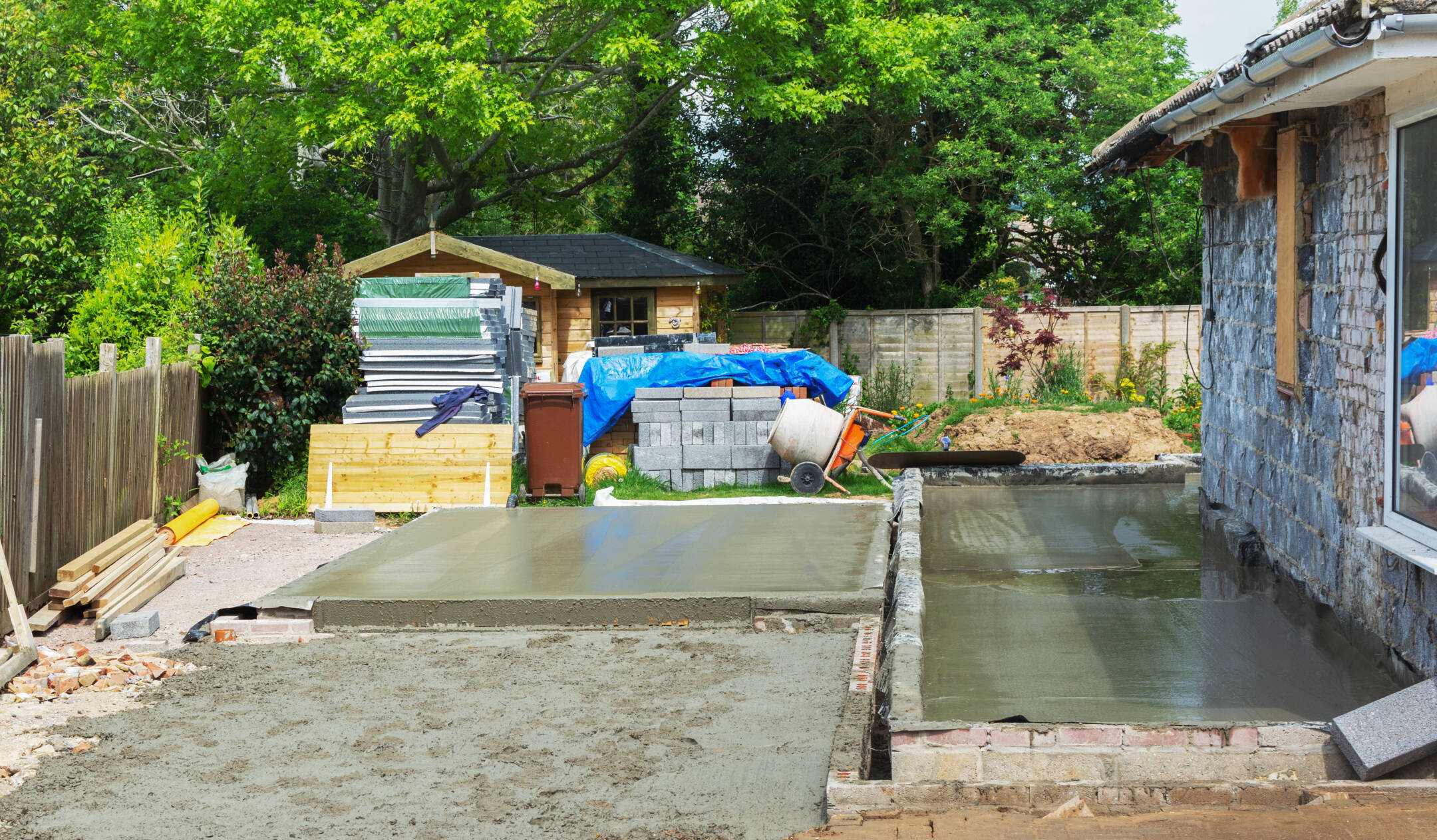
- What about the weather, is today a good day to pour?
People often worry about rain, cold snaps and hot spells, and with good reason. Weather affects how concrete sets and cures. In typical UK conditions, the aim is to avoid the worst extremes and to plan around the forecast.
A few general points:
- Light rain is manageable with covers and sensible timing. Heavy, persistent rain may call for a rethink.
- Cold conditions increase the risk of frost damage, so extra protection and timing matter.
- Hot, dry weather can cause faster drying, making curing and surface protection more important.
Mixed-on-site concrete gives more flexibility because the batch can be adjusted to suit conditions and you are not tied to a fixed load mixed hours earlier. It is still worth talking about the forecast when you book. New Mix can suggest good times of day and simple measures to protect the pour and curing phase so you get a strong, durable result.
- What information should I have ready when I call?
Having a few details to hand makes the booking call quicker and more useful. It is helpful to know:
- The type of project, such as a patio, driveway, base, garden room, footings, extension or yard.
- Approximate dimensions and depth of the slab.
- The planned date and time window.
- Any access constraints from the road to the pour point.
- Whether reinforcement is being used and who is placing it.
With that information, New Mix can advise on mix strength, approximate volume, lead times and how many people you will realistically need on site to handle the concrete as it arrives.
- What happens on the day of delivery?
On the day, the truck arrives, sets up as close as practical to the pour area, and the team starts batching concrete fresh into the mixer. Once the mix is ready, they barrow it to where it is needed while you or your contractor focus on spreading, tamping and finishing.
Because the concrete is metered as it is produced, you can monitor how much is being used, discuss any adjustments and stop when you reach your planned volume. There are no big piles of unused concrete to deal with and no pressure to use a fixed load that is not quite right for the job.
If you have a project in mind and would like to talk through quantities, access, mix choice or the likely impact of the current weather, New Mix Concrete is happy to help. You can call 0161 834 1312 or email sales@newmixconcrete.co.uk to discuss your plans and book a delivery that suits your site and schedule.