

A practical access checklist before you order concrete
Ordering concrete is often straightforward. Getting it to the exact point where it needs to be poured can be the part that catches people out.
For a driveway at the front of a property, access may be simple. But for extension foundations, a garden room base, a patio, retaining wall footings or a shed slab, the pour location is often behind the house, through a side gate or some distance from the road.
The concrete truck may be able to park outside. That does not necessarily mean it can get close to the work.
Before booking your delivery, take a few minutes to think about the route between the vehicle and the pour location. Good preparation can prevent delays, reduce unnecessary manual handling and help the pour run far more smoothly.
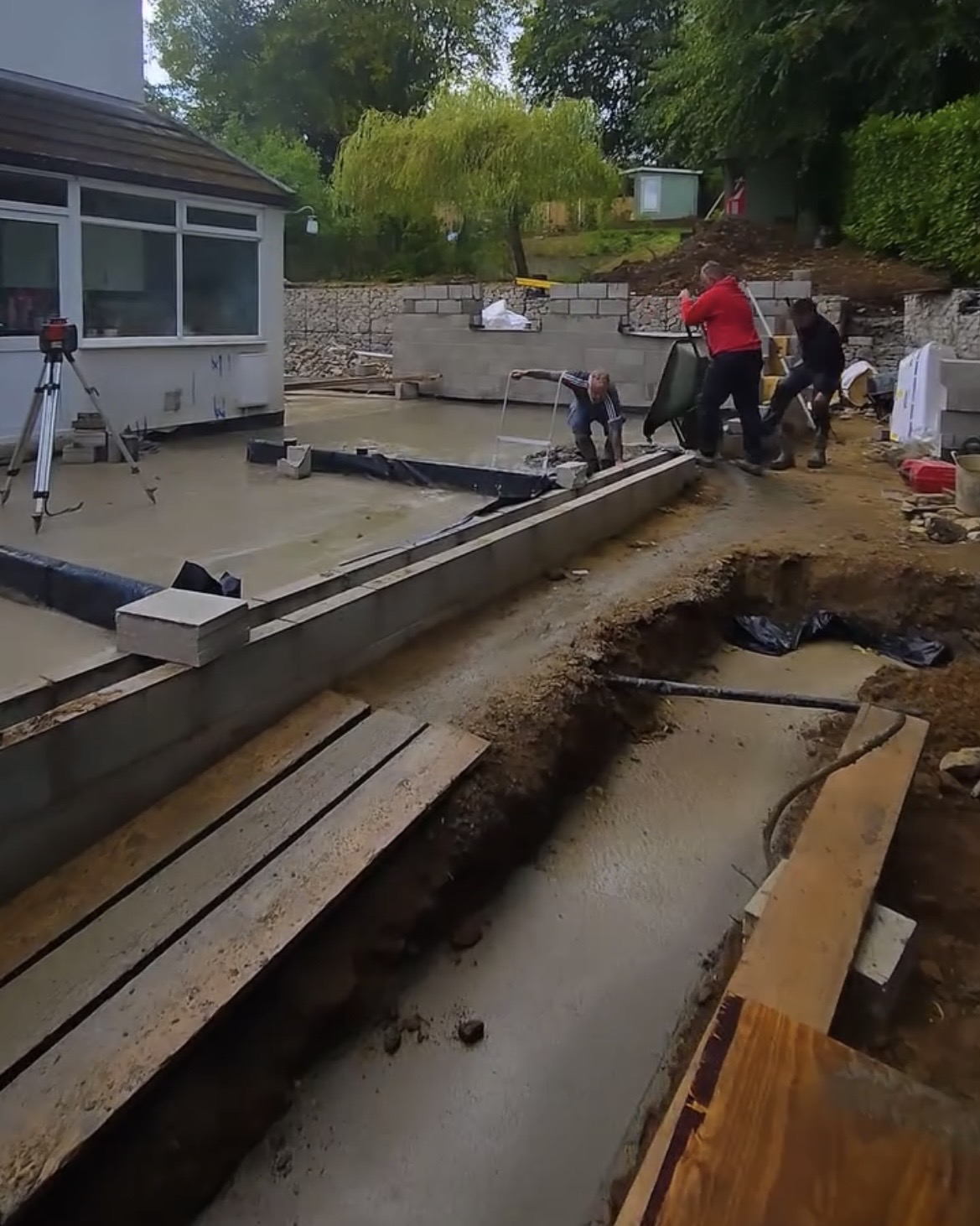
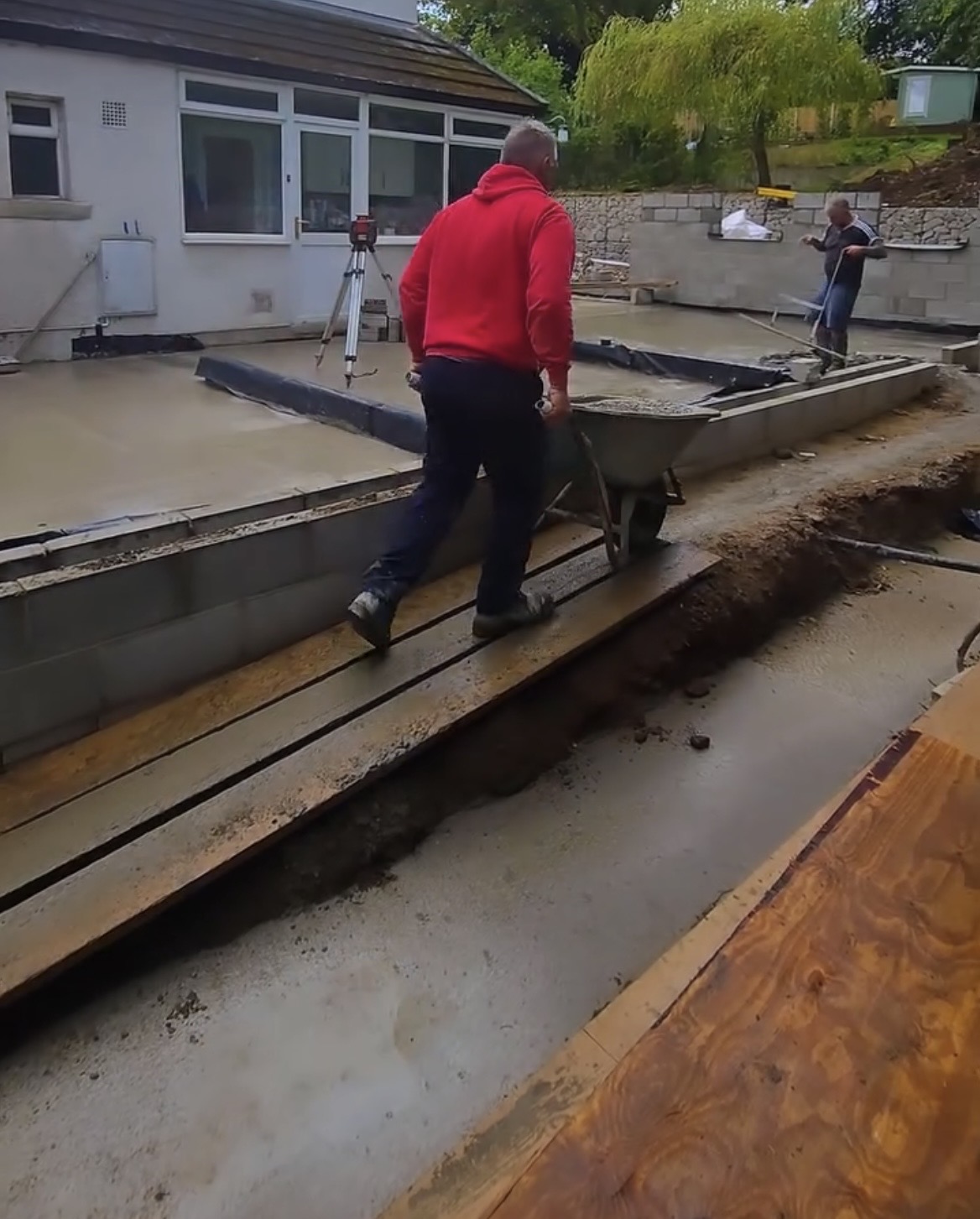
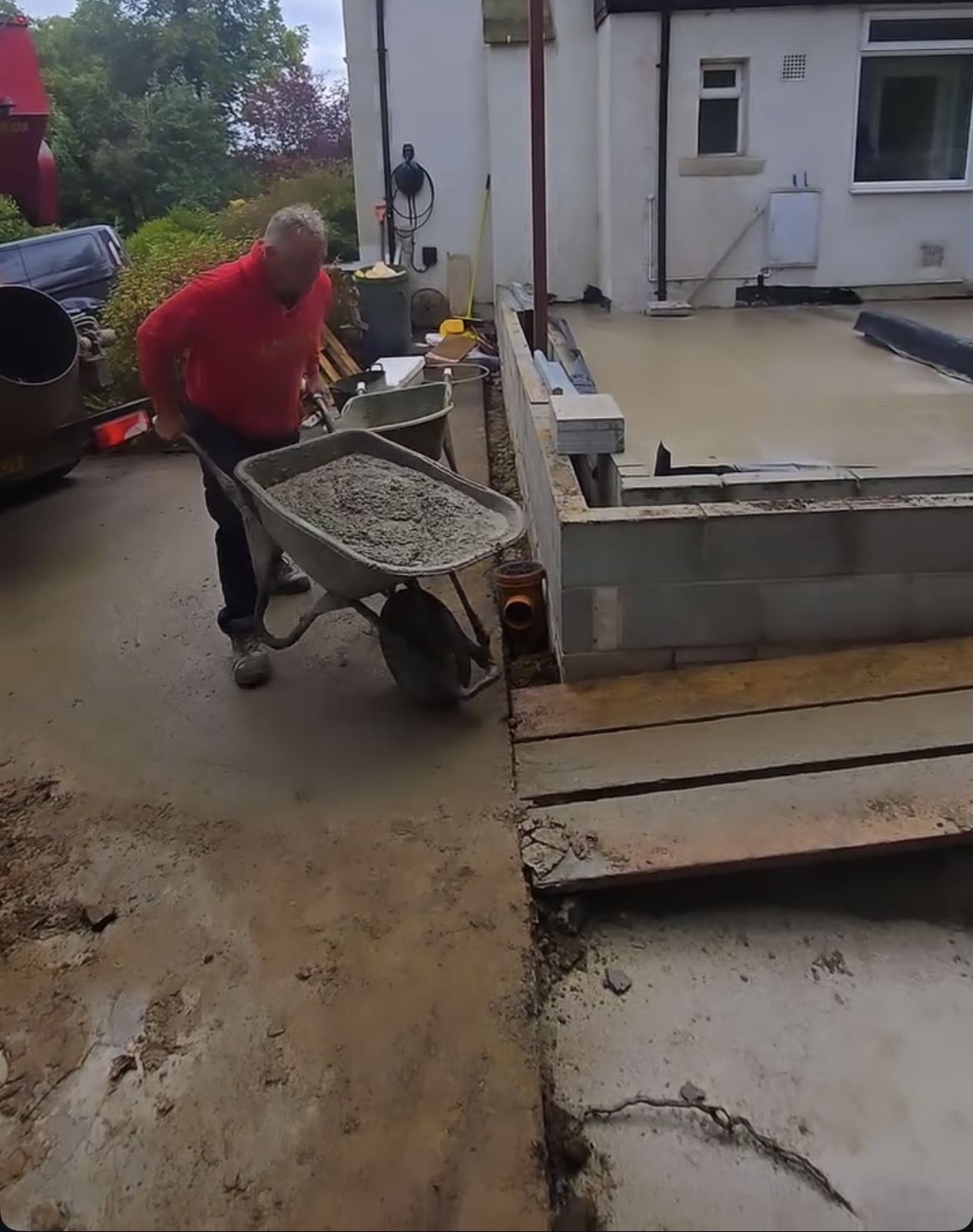
Trace the route from the road
Start at the place where the delivery vehicle is likely to park, then walk the full route to the pour location.
Look for anything that could obstruct a wheelbarrow or make moving concrete difficult. This might include parked cars, bins, skips, gates, garden furniture, building materials, uneven paving, steps or narrow passages.
It is easy to focus on whether a vehicle can get onto the drive. The more useful question is whether there is a clear, workable route from the vehicle to the area being concreted.
If the pour is at the rear of the property, check the side access properly rather than estimating from memory. Measure the narrowest point, including gate openings, and consider whether there is room to manoeuvre a loaded wheelbarrow, not just walk through.
New Mix advises allowing a minimum clear width of 750mm for its wheelbarrows. If access is especially tight, restricted or unusual, it is always worth discussing it when arranging delivery.
Check the ground underfoot
A clear route is only useful if it is safe and firm enough to use.
A full wheelbarrow of concrete is heavy. Soft ground, loose gravel, deep mud, steep slopes or uneven rubble can make the journey slower, harder and less safe. It can also create a mess across a finished garden, newly laid paving or a driveway you want to protect.
Where necessary, lay boards or suitable temporary protection along the route before the concrete arrives. This is particularly important after wet weather, when soil and unfinished ground can quickly become difficult to cross.
Do not assume a lawn is automatically suitable. Consider the condition of the ground, the distance to be covered and whether wheelbarrow traffic could damage the area. If in doubt, explain the route when you book.

Remove obstacles before delivery
The day of the pour is not the time to move garden furniture, shift pallets or find a place for the car.
Clear the route in advance, including any turning points, gate openings and the immediate area around the pour location. Keep tools, materials, extension leads and waste out of the way. If trades are working on site, make sure everyone knows when the concrete is due and that the access route needs to remain clear.
It is also sensible to think about practical distractions. Keep children and pets away from the route, and make sure there is a clear place for the delivery vehicle to stop safely without blocking access unnecessarily.
Make sure the pour is genuinely ready
Concrete should arrive when the groundwork is complete, not when it is nearly complete.
Before delivery, check that excavations are finished, formwork is secure, reinforcement is in place where required and levels have been checked. For slabs and bases, make sure the sub-base has been prepared and compacted. Have the people, tools and finishing equipment ready before the concrete arrives.
A barrowing service can get fresh concrete to the pour location, but it cannot make up for incomplete preparation. The more organised the site is, the more efficiently the concrete can be placed, levelled and finished.
Be honest about distance and difficulty
A short, level route through a wide side passage is very different from a long route across soft ground, up steps or around several tight corners.
When speaking to your supplier, describe the access clearly. Tell them where the vehicle will park, how far the pour is from the road, the narrowest part of the route and whether there are slopes, steps or changes in level.
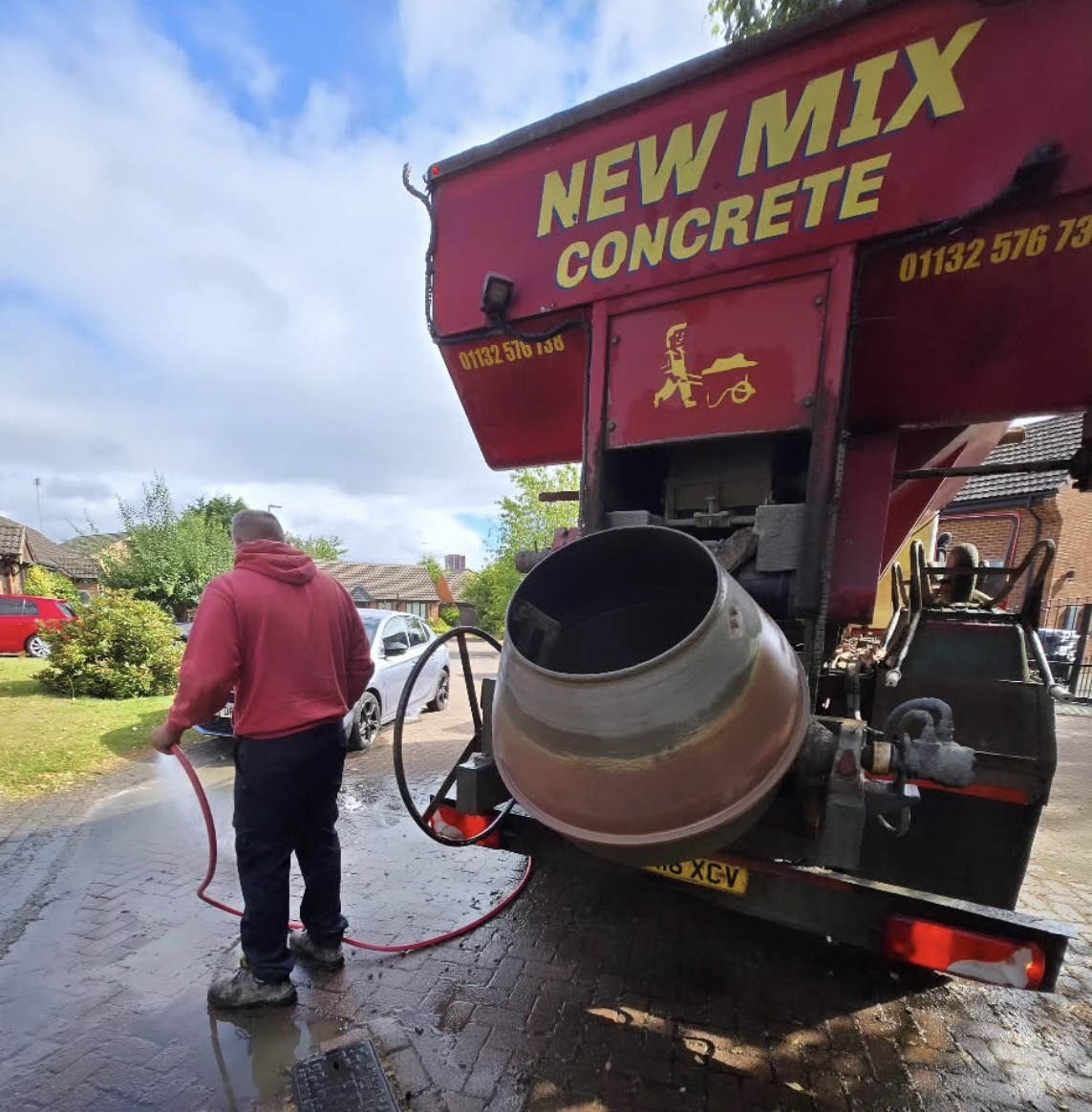
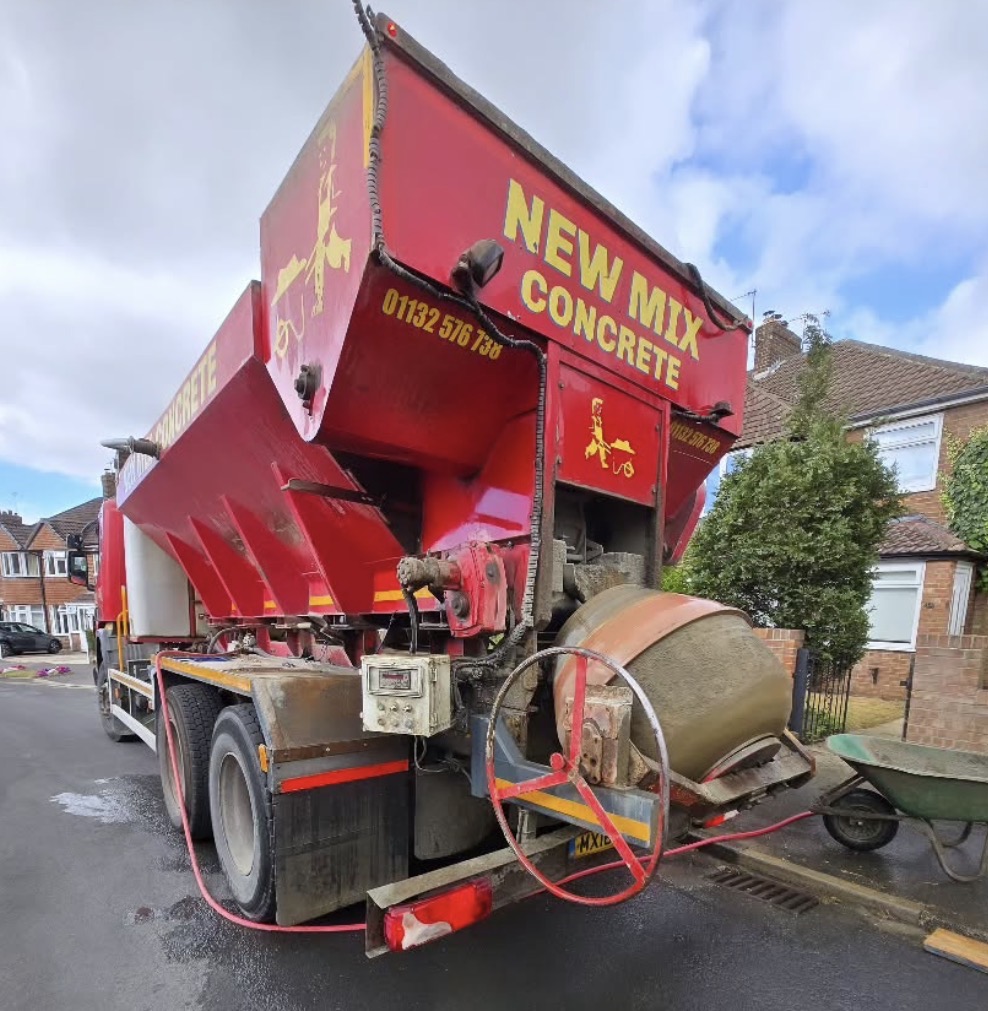
New Mix can mix concrete on site and barrow it from the vehicle to the pour location, which is particularly useful for work at the rear of a property or on sites without direct vehicle access. The company asks customers to discuss routes over around 30 metres or any challenging access before delivery, so the job can be planned properly.
A better start to pour day
Concrete delivery should not leave you with a load of material at the roadside and no practical way of getting it to the job.
By checking access, clearing the route, protecting vulnerable ground and preparing the pour location in advance, you give the delivery team the best possible chance of keeping the job moving. And when concrete is mixed on site and barrowed directly to the point of placement, the focus can stay where it should be: on completing a good pour.